If you are searching for commercial interior designers, the first thing I would say is that a business interior is judged differently from a home. A home has to please the people who live in it. A clinic, salon, office or restaurant has to please strangers within about ten seconds of them walking through the door, and then keep working hard every day after that.
I get enquiries from business owners in Hale, Wilmslow, Alderley Edge, Knutsford and Prestbury, and most of them start with the same worry: "I know what I want it to feel like, but I don't know who can actually deliver it." So here is how I would choose.
What commercial interior designers actually do
The phrase covers a lot of ground, so it helps to be clear about what you need.
Some commercial designers are space planners. They are brilliant at fitting the most desks, or the most covers, into a floor plate. Some are fit-out specialists who work mainly with contractors on larger schemes. And some, like us, are designers who start with atmosphere and brand, then make the layout, lighting, joinery and finishes serve it.
None of these is wrong. A 200-person office needs a different kind of expertise from a boutique clinic or a members' bar. The mistake is hiring one kind of designer for the other kind of job.
For the smaller, high-end spaces we tend to work on, the brief is usually about feeling: calm, polished, welcoming, memorable. That is where an interior designer earns their place, because feeling comes from dozens of small decisions made consistently.
Start with your customer, not with the mood board
A good commercial designer will ask about the people who use your space before they show you a single material.
Who walks in, and what state are they in when they arrive? Nervous, rushed, relaxed, curious? How long do they wait? What do they touch, sit on and look at? What should they remember when they leave?
If the first conversation is all about colours and finishes, be a little wary. Those are the last decisions, not the first.
Ask to see finished spaces, not just visuals
Computer visuals are useful, but they are not proof. Ask to see photographs of completed commercial work, and look at them properly.
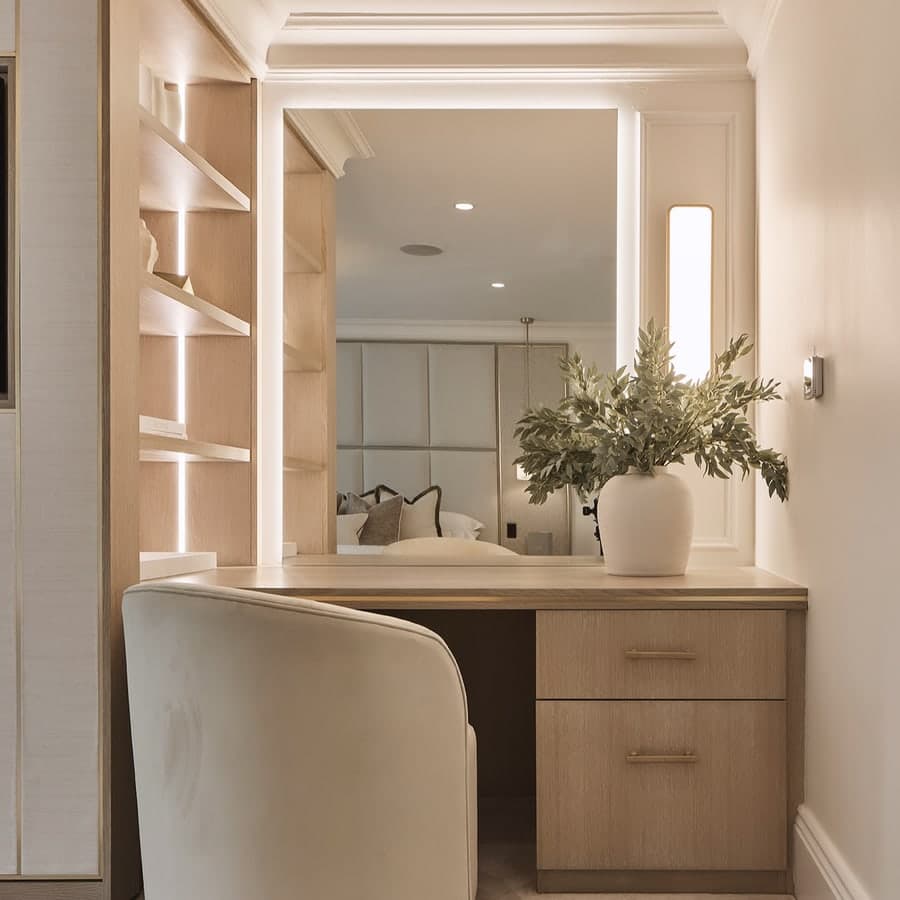
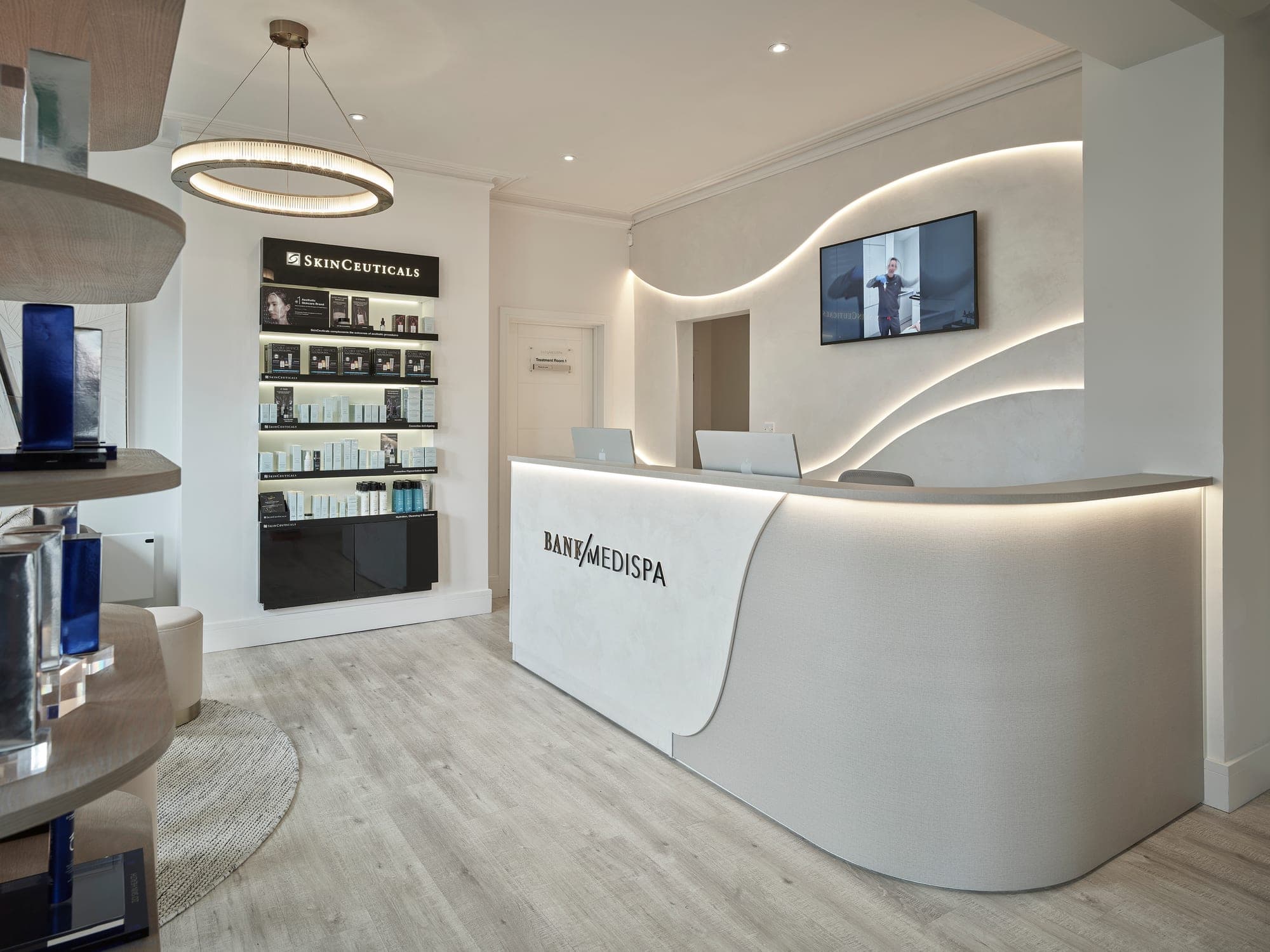
Are the details resolved? Look at where the joinery meets the wall, how the lighting falls on the reception desk, whether the shelves look styled or merely filled. Does the space feel like a considered whole, or a collection of nice things?
Also ask whether the designer has worked on spaces like yours. You do not need an identical project, but you do want someone who understands the pressures of a working business, such as footfall, cleaning, wear and the need to look good on an ordinary Tuesday as well as at the launch.
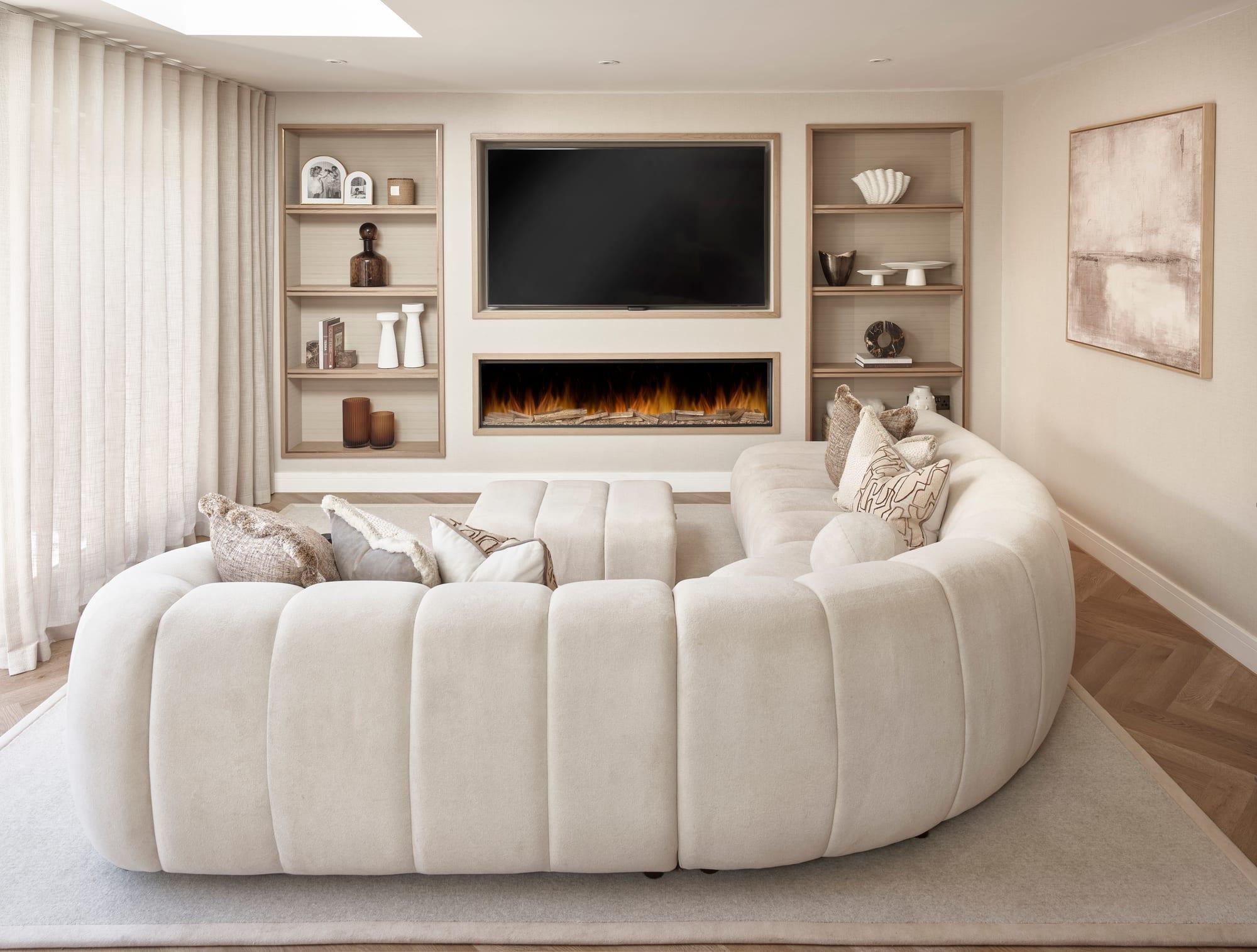
Our Bank Medi Spa project is a good example of the kind of commercial work we do: a calm, polished, luxury clinic in Hale, with a reception, waiting area, built-in shelving and treatment rooms all designed to feel like one place.
Check how they handle the practical side
This is where a lot of commercial projects go wrong. A beautiful room that is awkward to clean, hard to light or tiring to work in will cost you in the end.
Ask how the designer thinks about:
- Durability. Which materials will take daily use, and which will look tired in a year?
- Lighting. Is it planned in layers, so the space works for staff at midday and for customers in the evening? I wrote about this in how to light a room, and it matters even more in a business.
- Joinery and storage. Where does everything actually go? Commercial spaces fill up with stock, paperwork and equipment faster than anyone expects.
- Regulations. A designer should know when to bring in your architect, surveyor or building control, and be honest about what they do and do not cover. Drawings show design intent, and your trades will measure on site before anything is made.
Understand who is responsible for what
Before you sign anything, ask how the project is run. Does the designer only produce drawings, or do they also source, coordinate and see it through on site? Who speaks to the contractors? Who checks that what arrives is what was specified?
I am a firm believer in design that is carried through to the end, because the gap between a drawing and the finished room is where most of the magic, and most of the disappointment, happens. If you want to understand the difference in approach, how to choose an interior designer goes through it in detail, and much of it applies to commercial work too.
Be open about budget and fees
A good designer will talk about money early and plainly. Ask how fees are structured, what is included, and what would be extra. Ask for it in writing.
I would also be careful of anyone who gives you a figure for the whole project before they have seen the space and understood the brief. Every business interior is different, and an honest answer takes a proper conversation.
What it looked like in practice
With the Hale clinic, the brief was a space that felt like a sanctuary the moment you came in. That meant thinking about the whole journey: the reception desk, the waiting area, the shelving that holds product and display, and the treatment rooms. I wrote about how it came together in the Bank Medi Spa case study.
The lesson I took from it is the one I would pass on to anyone hiring a commercial designer: the best results come from someone who treats your business as a place people experience, not just a floor plan to be filled.
Questions to ask at your first meeting
- Have you designed spaces like mine, and can I see them finished?
- How do you work out what my customers need?
- Who manages the project once the drawings are done?
- How are your fees structured, and what is not included?
- How do you handle durability, lighting and storage?
- Who do you bring in for the things you do not cover?
The answers matter, but so does how they are given. You want someone who listens, explains plainly and is happy to say "that is not my area" when it is not.
If you are planning a clinic, salon, studio, office or hospitality space, and you would like to talk it through with someone who will be straight with you, I am always happy to have a conversation. You can find us in Hale, and there is no pressure to take it any further.