You can get the big things right, the sofa, the paint, the curtains, and a room can still feel somehow unfinished. Nine times out of ten, the missing piece is the styling: the lamps, the books, the objects and the little moments on shelves and surfaces that make a home feel considered and personal rather than showroom-empty. It’s the layer people find hardest, so here are the simple rules we use to make it look effortless.
Work in odd numbers
It’s the oldest trick in the book, and it genuinely works. Groupings of three or five feel more natural and relaxed to the eye than neat, even pairs. So when you’re arranging objects on a shelf or a surface, think in odd little clusters rather than symmetrical rows.
Vary the height, texture and shape
The secret to a grouping that looks "styled" rather than random is contrast. Pair something tall (a lamp, a vase, a stack of books stood upright) with something low and something in between, and mix your textures and shapes: something smooth against something rough, a curve against a straight line, a bit of timber, ceramic, glass and metal. That mix is what gives a vignette depth.
Styling a console table
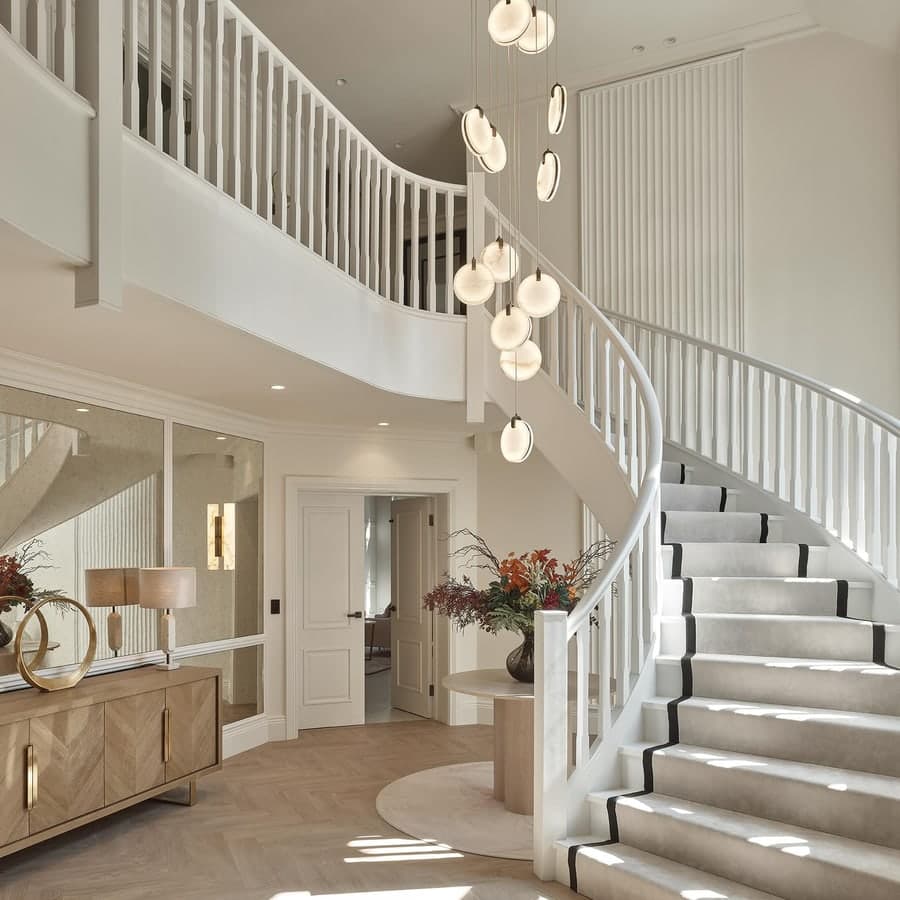
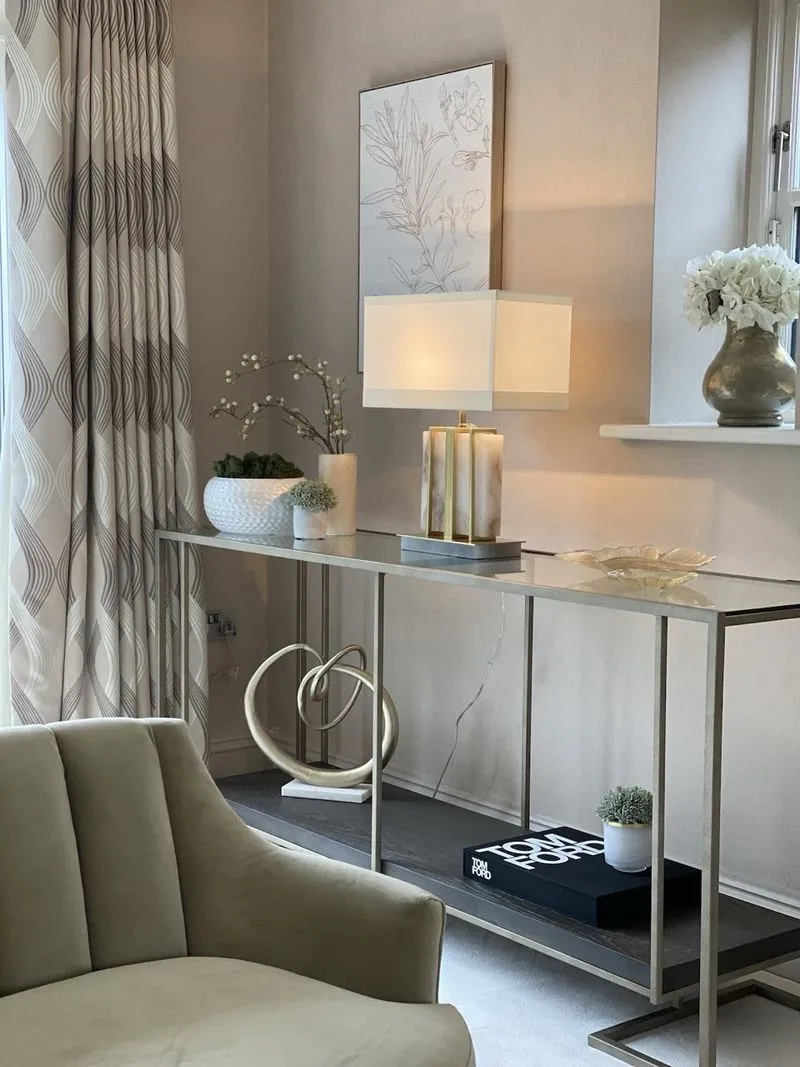
A console in a hallway or behind a sofa is one of the best places to create a little moment. Start with something to anchor each end, a pair of lamps or a lamp balanced with a tall vase, then layer in the middle with a stack of books, a sculptural object and a bowl or tray to catch keys. Leave a little breathing space so it feels collected, not cluttered.
Styling a coffee table
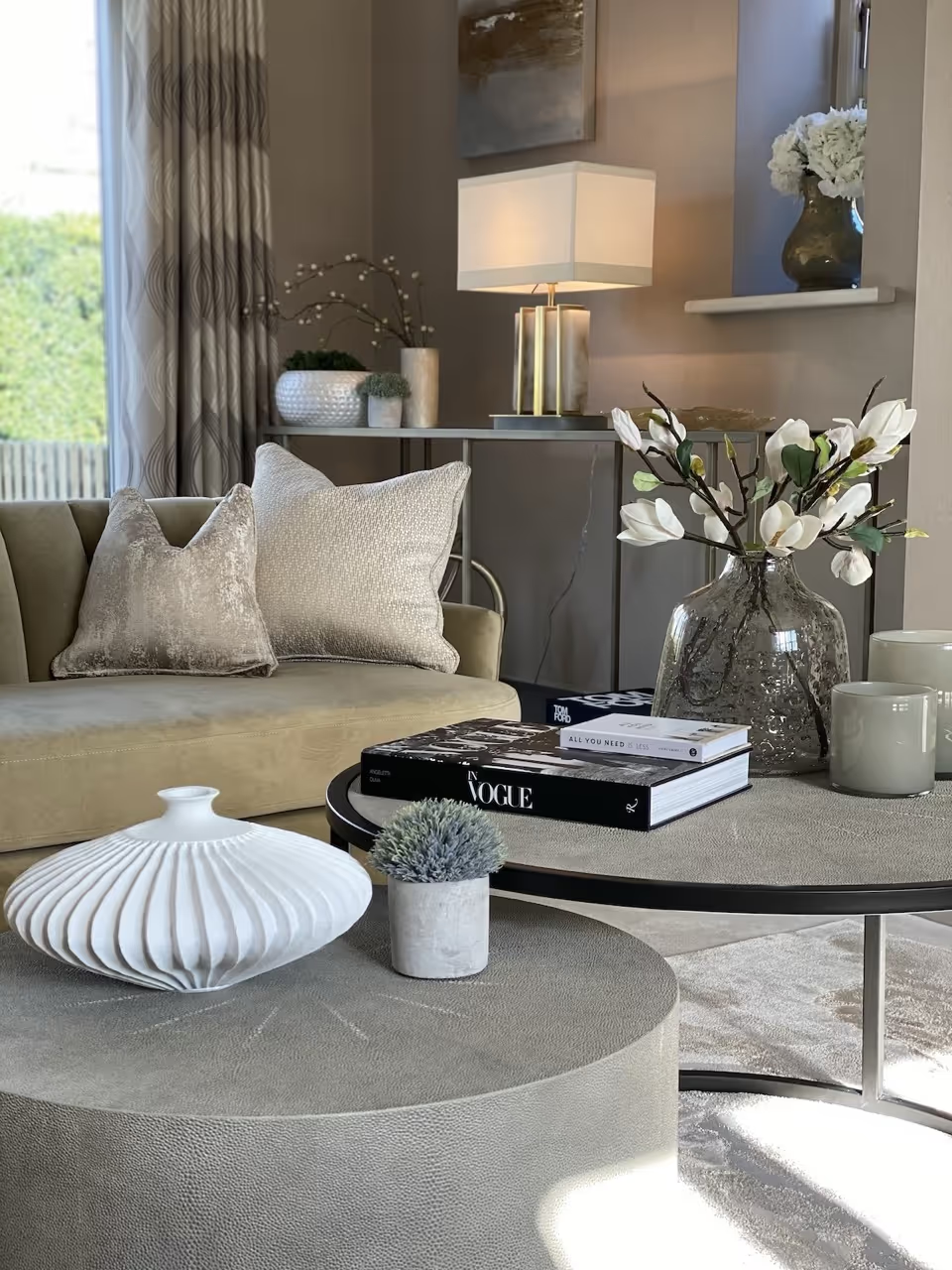
The easiest way to make a coffee table look pulled-together is the tray trick: sit a tray in the centre and arrange a few things on it, a candle, a small stack of design books, a little object or a bowl, plus something living like a low arrangement of flowers or greenery. The tray corrals everything so it reads as intentional rather than scattered, and it’s easy to lift off when you actually want to use the table.
Styling open shelves
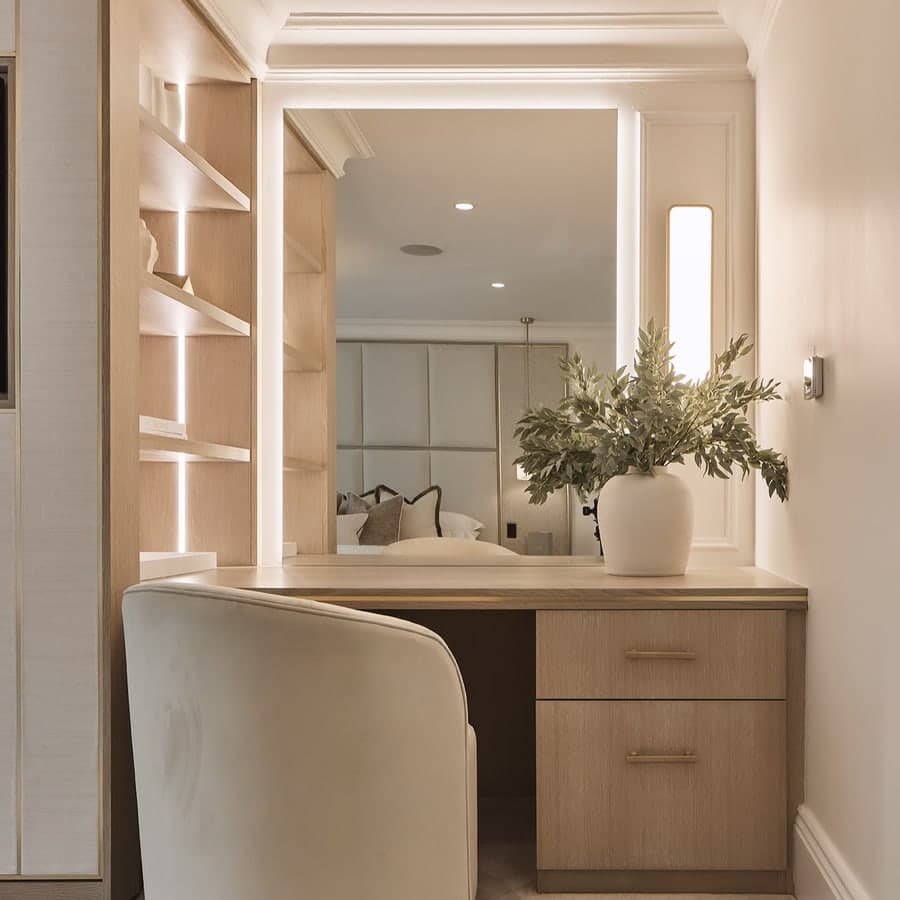
Open shelving is where people most often come unstuck, usually by filling every inch. The trick is to treat it like a series of small vignettes and to be generous with negative space. Mix books stacked flat and standing upright, break the runs with a few objects and a piece of art propped rather than hung, and let some shelves breathe with almost nothing on them. Fitted, well-built shelving gives you the perfect backdrop for this, which is one of the quiet joys of bespoke joinery.
Bring in something living
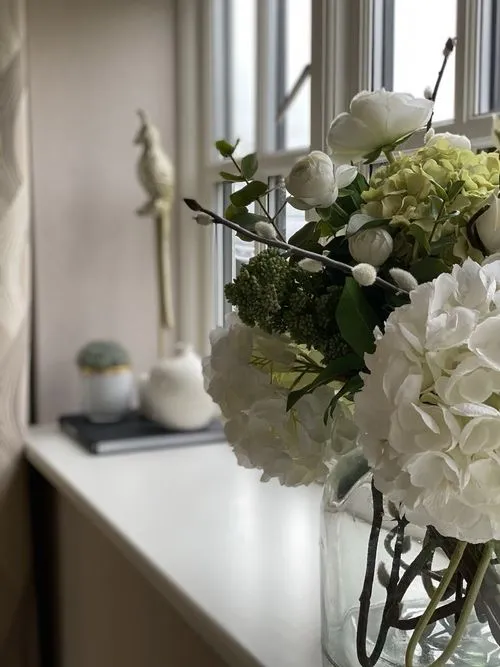
Almost every surface we style has something natural on it: fresh flowers, a little greenery, a branch, a bowl of something. It softens all the hard edges and instantly makes a room feel loved and lived-in rather than staged. If real flowers feel like too much upkeep, a single good faux stem or a trailing plant does the same job.
Then edit, and edit again
If there’s one rule that matters most, it’s this: less is more. The most common styling mistake is simply too much. Once you’ve arranged a surface, take a step back, and take a couple of things away. A few beautiful, well-chosen pieces with room to breathe will always look more expensive than a surface crowded with bits, which is a theme I come back to in how to make a room look more expensive.
Styling is the layer that turns a house into a home, and it’s the part we love most. If you’d like help pulling your rooms together, from a living room to a whole home, get in touch, I’d love to hear about your home.