
There's a moment in almost every renovation where a homeowner realises they need professional help. Sometimes it's staring at a kitchen layout that doesn't quite work. Sometimes it's choosing between three very similar shades of beige and suddenly questioning everything. And sometimes it's standing in a half-finished shell of a room, surrounded by decisions that should have been made months ago.
We see it often at Cheshire Property Studio, clients who come to us partway through a project, wishing they'd made the call earlier. Not because they've done anything wrong, but because a renovation moves fast once it starts, and the decisions that shape a home most are almost always the ones made at the very beginning.
This post is about why timing matters, and what changes when an interior designer is involved from day one.
The Decisions That Matter Most Happen First
It's easy to think of interior design as the finishing layer, the paint colours, the furniture, the cushions on the sofa. But the decisions that have the greatest impact on how a home looks, feels and functions are structural. Where walls sit. How rooms flow into one another. Where natural light falls and how it's used. The position of doorways, the height of ceilings, the routing of electrics and plumbing.
These are decisions that happen at the planning and building stage, and once they're locked in, they're either impossible or extremely expensive to change. An interior designer who's involved from the outset can influence all of them. One who's brought in after the plastering is done can only work around them.
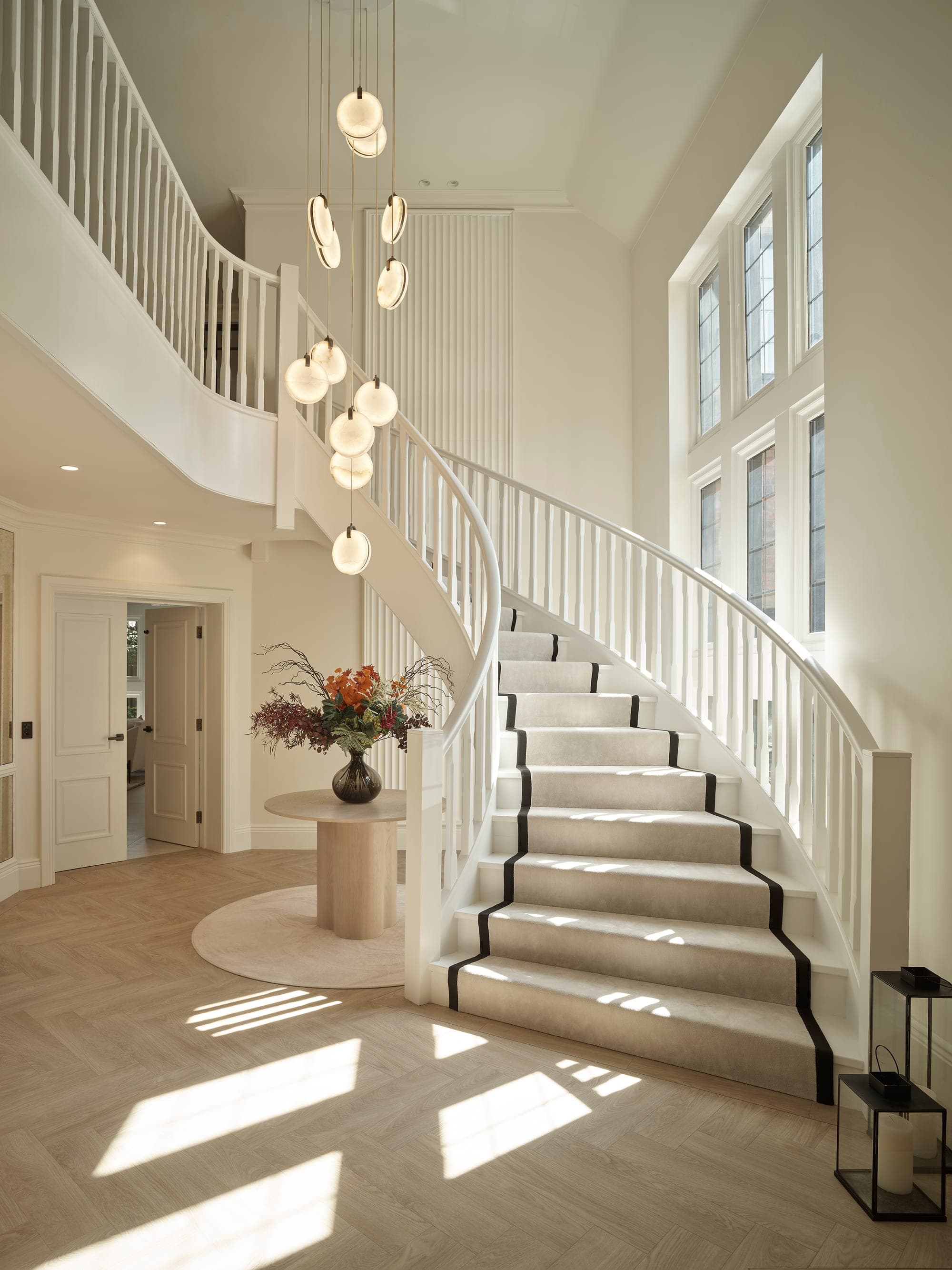
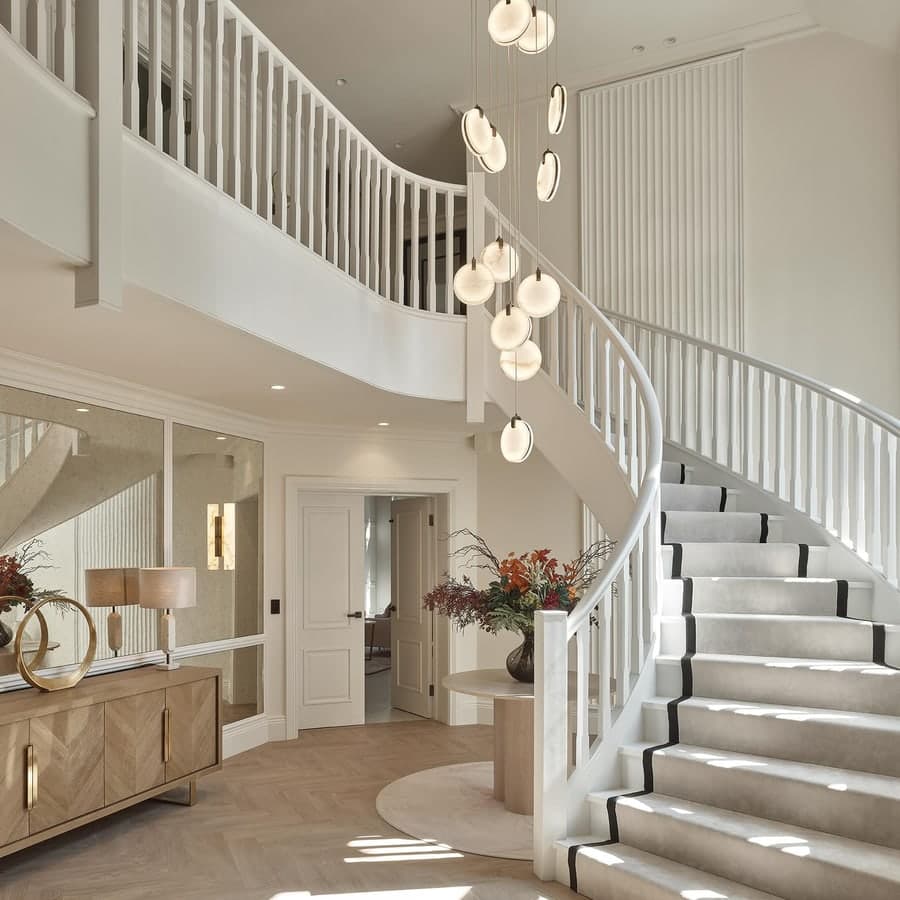
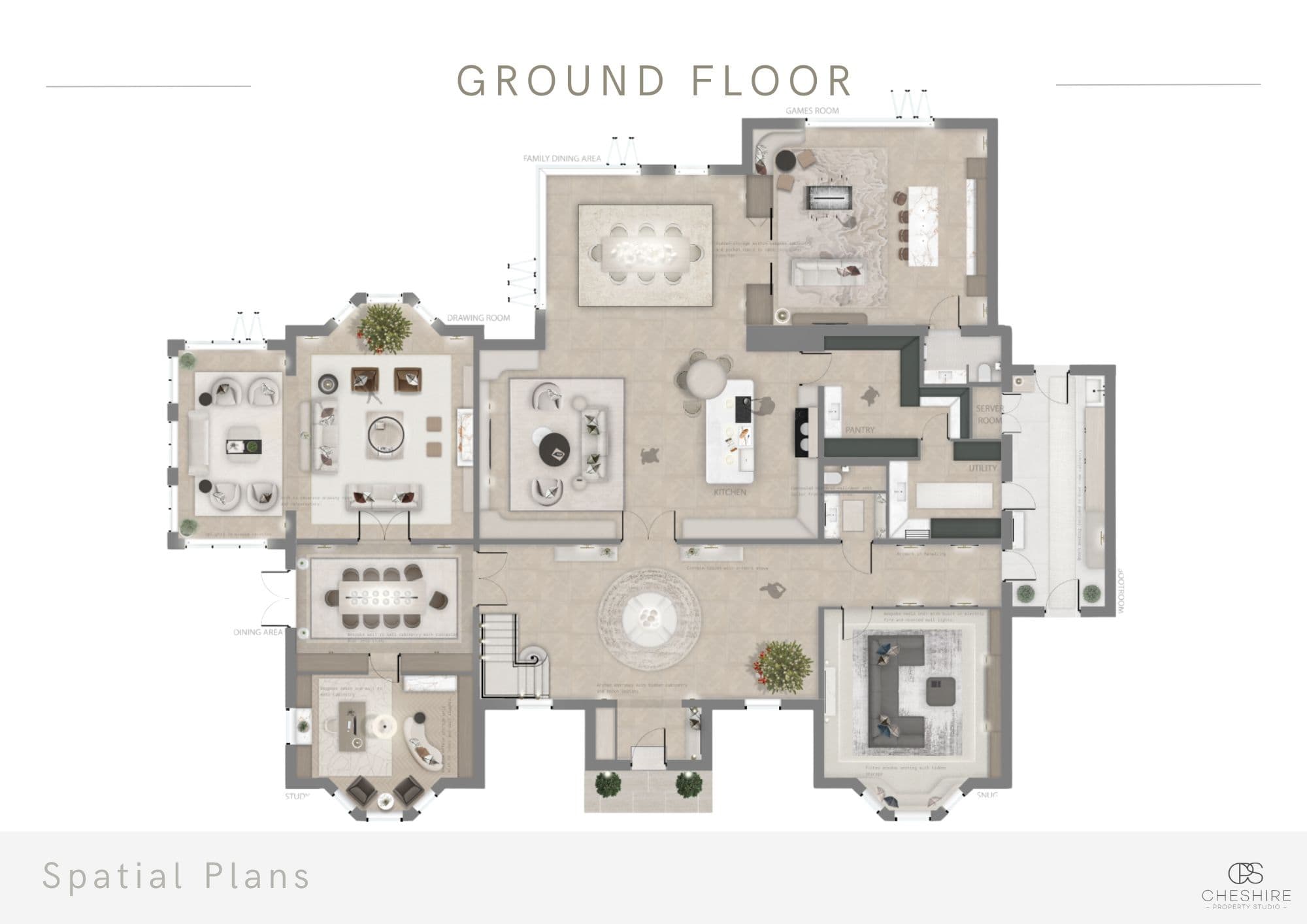
At Cheshire Property Studio, some of our best work has started with a set of architect's drawings and a blank site. That's when we can think about spatial flow properly, how a kitchen connects to a dining area, where a utility room sits in relation to the back door, how a hallway can feel generous rather than like an afterthought. These aren't cosmetic decisions. They're architectural ones, and they need a designer's eye before the first wall goes up.
Space Planning Is Not Something You Can Retrofit
Space planning is arguably the most valuable thing an interior designer does, and it's the one thing that becomes almost impossible to change later. A room that's been built to the wrong proportions will never feel quite right, no matter how beautiful the furniture is. A kitchen island positioned without thinking about sight lines, traffic flow or how the space is actually used will always feel slightly off.
When we're involved early, we work through space planning before construction begins. That means testing furniture layouts against floor plans, checking that socket positions make sense for where lamps and appliances will actually go, and making sure that every room has been thought through from the perspective of someone who will live in it, not just someone who's building it.
Builders and architects are exceptional at what they do, but their focus is structure and construction. Ours is how a space will be lived in. Those two perspectives complement each other brilliantly but only if they're both in the room from the start.
A room that's been built to the wrong proportions will never feel quite right, no matter how beautiful the furniture is.
Early Involvement Saves Money, Not Just Time
One of the most common misconceptions about hiring an interior designer is that it adds cost. In reality, early involvement almost always saves money, often significantly. Changes made on a drawing cost nothing. Changes made on a building site cost thousands.
We've seen clients move door openings, reconfigure bathrooms, and even relocate kitchens based on our space planning recommendations, all before a builder lifted a tool. Had those same changes been made mid-build, the cost in labour, materials and programme delays would have been substantial. And in some cases, the client would simply have lived with a layout that never quite worked, because fixing it felt too disruptive.
There's also the question of specification. An experienced interior designer knows where to invest and where to save, which surfaces need premium materials and which don't, which supplier offers better value for the same quality, where bespoke joinery is worth the cost and where a well-chosen off-the-shelf piece works just as well. That kind of knowledge, applied across a full renovation, can easily save more than the design fee itself.
Changes made on a drawing cost nothing. Changes made on a building site cost thousands.
Your Designer, Your Architect and Your Builder, The Triangle That Works
The best renovations we've been part of have one thing in common: a strong working relationship between designer, architect and builder from the outset. When all three are aligned early, decisions are made once, clearly, with full context, rather than revisited and revised as the project moves forward.
As interior designers, we bring something specific to that triangle. We think about materials, finishes, lighting layers, storage solutions and the practical realities of how a family actually uses their home. An architect is thinking about structure, planning permissions and building regulations. A builder is thinking about programme, sequencing and build ability. None of those perspectives is more important than the others, but the project is materially better when all three are present from the planning stage.
When we're brought in later, after the architect has completed their drawings and the builder has started on site, we're working within constraints that were set without our input. We can still make a significant difference, and we often do. But the scope of what's possible narrows with every week of construction that passes.
What 'Early' Actually Means
When we say early, we mean before your builder starts on site and ideally before your architect finalises their plans. That's the sweet spot. At that stage, everything is still fluid. Walls can move. Room functions can change. Ceiling heights can be adjusted. Lighting schemes can be designed into the electrical first fix rather than added as an afterthought.
In practical terms, the right moment to get in touch is when you've decided you want to renovate, extend or build, even if you're not sure exactly what you want yet. In fact, especially if you're not sure. That's precisely when an interior designer adds the most value, because we can help you work out what you actually need from your home before the technical plans are drawn up.
Our initial discovery calls at Cheshire Property Studio are complimentary, and they're designed exactly for this stage, an honest conversation about your home, your project and how we might work together. No obligation, no hard sell. Just a clear-eyed look at what's possible and how to get there.
What Happens When a Designer Comes in Late
We'd never turn away a client who's mid-renovation, and we've delivered some beautiful results for people who came to us after building work was already underway. But it's worth being honest about what changes when the timing is later.
Typically, the space plan is already fixed. The electrical first fix is done, which means lighting positions and socket layouts are set. Structural openings, ceiling heights and room proportions are locked in. What we can influence at that stage is finishes, furniture, soft furnishings, styling and the overall design concept, which still makes an enormous difference to how a home looks and feels.
But the homeowners who get the most from working with us, the ones who walk into their finished home and feel like every detail has been considered, are almost always the ones who picked up the phone before the building work began.
Ready to Start the Conversation?
If you're planning a renovation, extension or new build anywhere in Cheshire, whether that's Hale, Altrincham, Wilmslow, Knutsford, Prestbury or beyond, we'd love to hear from you. The earlier the better, but wherever you are in the process, there's always value in talking it through with a designer who genuinely cares about getting your home right.
Get in touch to arrange your complimentary discovery call with Cheshire Property Studio. We're based at 180 Ashley Road, Hale, and we work with homeowners across Cheshire and the rest of the country.